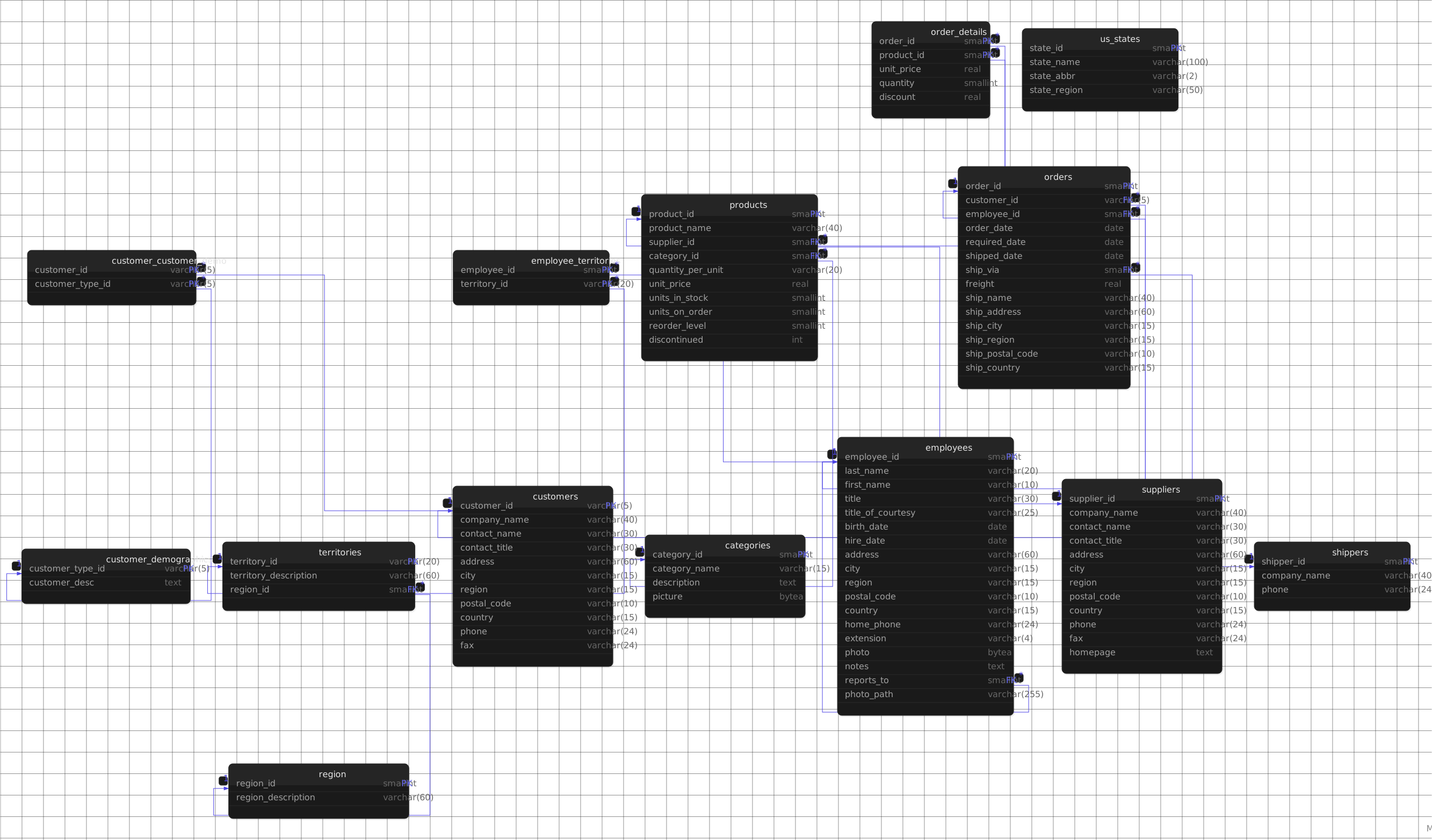
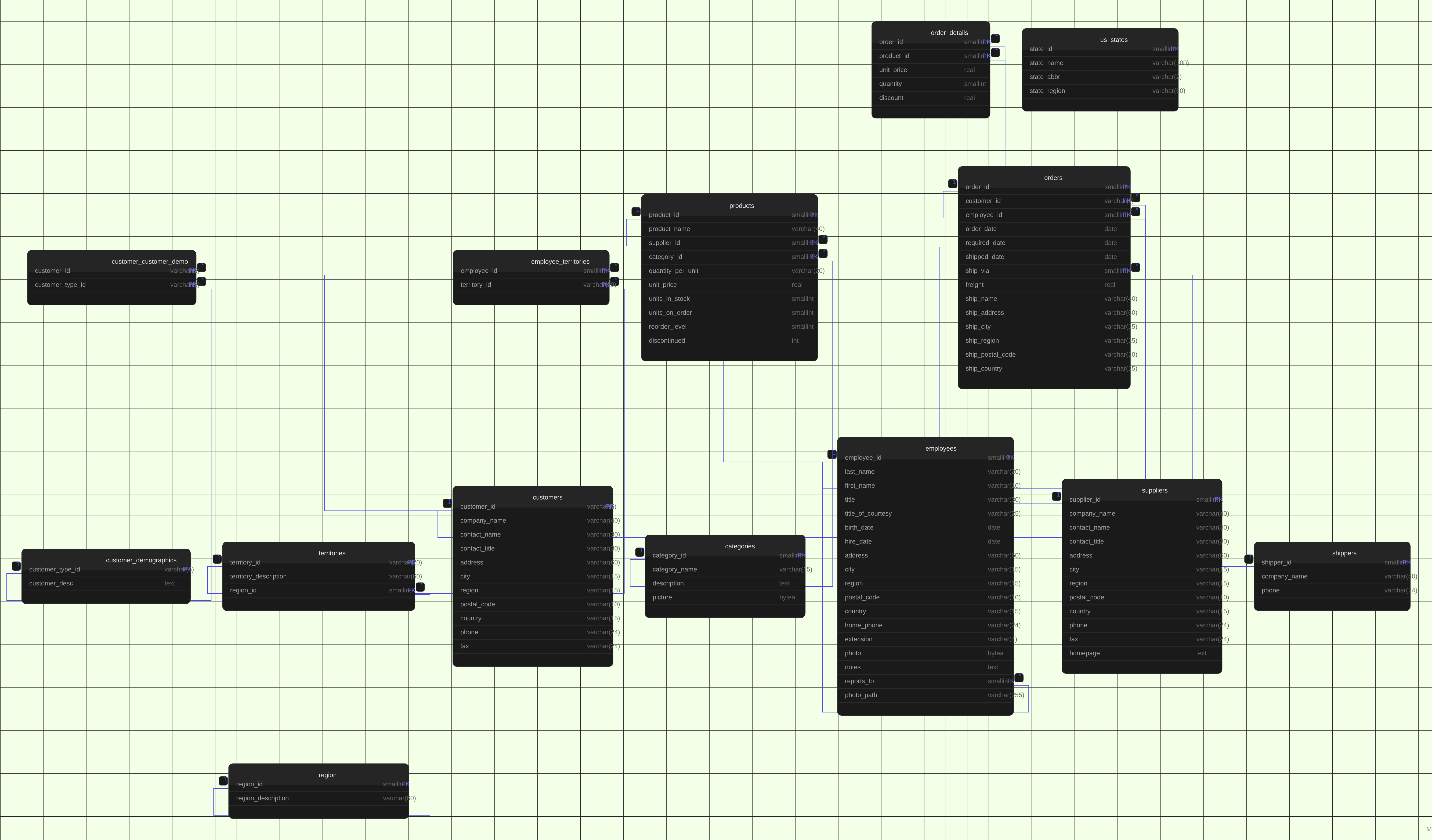
10 relationships connect the tables in this schema. Each entry shows the child columns, the parent columns they reference, and the cardinality.
Many-to-many
customer_customer_demo (customer_type_id -> customer_demographics.customer_type_id, customer_id -> customers.customer_id)
Many customer demographics can have many customers through customer_customer_demo (customer_customer_demo.customer_type_id -> customer_demographics.customer_type_id, customer_customer_demo.customer_id -> customers.customer_id).
Self-referencing
employees.reports_to → employees.employee_id
One employee can have many child employees (employees.reports_to -> employees.employee_id, optional).
Many-to-many
employee_territories (territory_id -> territories.territory_id, employee_id -> employees.employee_id)
Many territories can have many employees through employee_territories (employee_territories.territory_id -> territories.territory_id, employee_territories.employee_id -> employees.employee_id).
Many-to-many
order_details (product_id -> products.product_id, order_id -> orders.order_id)
Many products can have many orders through order_details (order_details.product_id -> products.product_id, order_details.order_id -> orders.order_id).
One-to-many
orders.customer_id → customers.customer_id
One customer can have many orders (orders.customer_id -> customers.customer_id, optional).
One-to-many
orders.employee_id → employees.employee_id
One employee can have many orders (orders.employee_id -> employees.employee_id, optional).
One-to-many
orders.ship_via → shippers.shipper_id
One shipper can have many orders (orders.ship_via -> shippers.shipper_id, optional).
One-to-many
products.category_id → categories.category_id
One category can have many products (products.category_id -> categories.category_id, optional).
One-to-many
products.supplier_id → suppliers.supplier_id
One supplier can have many products (products.supplier_id -> suppliers.supplier_id, optional).
One-to-many
territories.region_id → region.region_id
One region can have many territories (territories.region_id -> region.region_id, required).